For this post, I chose to research calypso music!
The music:
Jump In The Line By Harry Belfonte, released 1961… originally written by Lord Burgess.
https://www.youtube.com/watch?v=kMXBJW1PuU8
Jean and Dinah by Mighty Sparrow, released 1956
https://www.youtube.com/watch?v=HZ2_3hqFZvk

Calypso Music Overview:
This genre discerns itself from other more westernized works by the incorporation of traditional instruments and African inspired elements. Reggae, soca, and raspo are inspired by this music. This genre was born through the creation of a creole culture in the Caribbean. This was via Europeans bringing hundreds of African ethnic groups together on island plantations in the early 1500s. The birth of Trinidad and Toboggan culture was that of a dark one of slavery and suppression. Many of these people could not communicate with each other through spoken language due to slave owners’ rules and language barriers between cultures.
In the late 1800s many French and British people began to immigrate to the Caribbean which added another layer of culture, one that people of color were mostly excluded from. French and British colonizers would have white only carnivals… islanders created their own (and better) version called Canboulay. The genre of calypso was formed in parallel to celebrations, but also stemming as a means of communication amongst slaves mostly on Trinidad. Something odd I wanted to note was that while conducting my research for my UB40 post a few weeks ago there was zero mention of calypso roots. Seems to me like timeline wise they were not far apart.
A word about the Steel Drums:
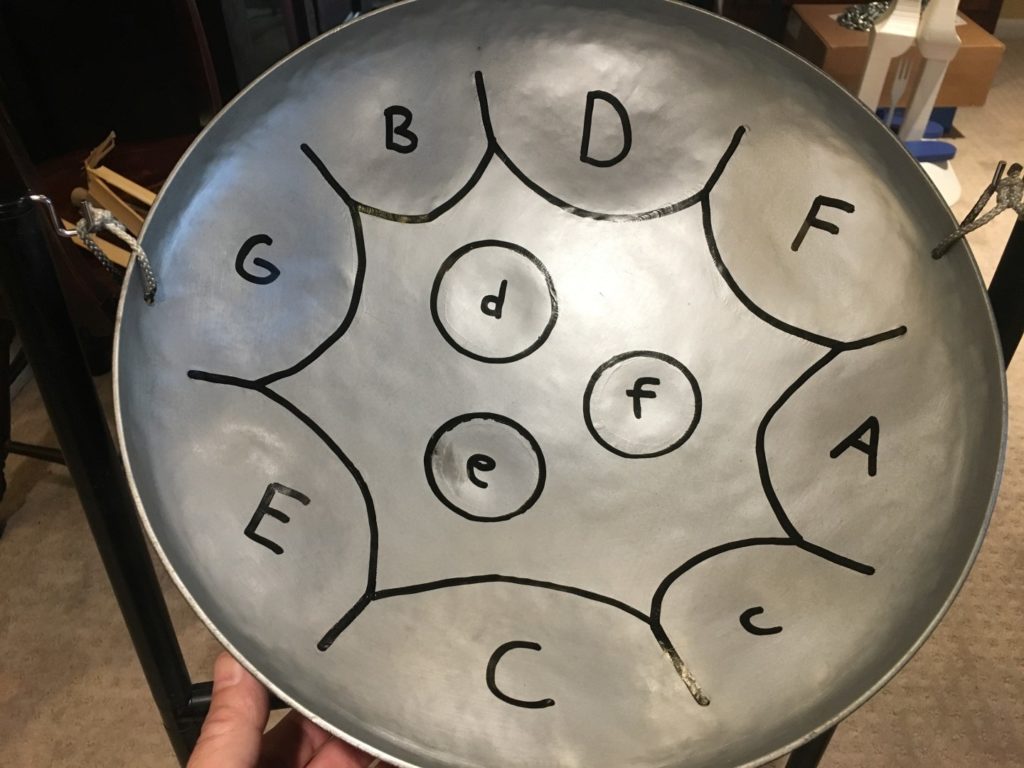
I thought it imperative to add a separate section about the flagship instrument of Trinidad and Tobago. The steel drum or pans as its technical name was an idiophone (a musical instrument that makes sound via the vibration of the instrument itself) developed due to instrument bans placed upon slaves. Using steel pans bent into different shapes to create different tones when struck with soft mallets allowed for a more melodic instrument that was allowed to be played. The way steel drums are made first involves the rounding and cutting of the bottom of an oil drum. Then, the rounded shape of the pan is carefully pounded into the different notes of the pan.
Jump In The Line Technical Analysis and Personal Opinion
The tempo of Jump In The Line is 116 BPM, and it can be played in half or double time. This rather fast tempo is appropriate for the happy and playful theme about a man trying to get a woman to dance with him. This song was designed to be danced to; the beat is 4 beats per bar. 4 beats per bar is common in Calypso music because the music as a genre is meant for moving to and dancing. This makes sense, because as I mentioned before this music was developed in parallel with creole carnivals of the early 1900s. It’s clear that this music is designed for celebrating. The structure of the song, and the use of genre specific instruments such as the Steel drum add a special flare to the song that is uniquely calypso.
Jean and Dinah Technical Analysis and Personal Opinion
Jean and Dinah is another fun song about 2 prostitutes during the periods of military occupation. I chose this as my second piece because based off everything I read about calypso music, Mighty Sparrow is one of the greats in the genre. The tempo for this song is a little slower, ad 112 bpm. I don’t find this surprising as all the pieces I’ve looked into researching share this fast pace. The lyrics of the song are really fun, and it’s actually been revised by Mighty Sparrow himself to be more period appropriate… although I’m unsure of the exact changes or when they were made, it is an old song. I like when he refers to soldiers as “cavemen” coming into town, and the rhyming of “Jean and Dinah, Rosita and Clementina” is clever. Those are names you don’t hear much anymore.
“Bright Star (Musical).” Wikipedia, Wikimedia Foundation, 1 Mar. 2023, https://en.wikipedia.org/wiki/Bright_Star_(musical).
Music of Trinidad and Tobago, https://www.cs.mcgill.ca/~rwest/wikispeedia/wpcd/wp/m/Music_of_Trinidad_and_Tobago.htm.
Great job on your article about calypso music! I agree with you that this kind of music makes you want to dance and celebrate! These are connected to the rhythm, structure, and instruments included in these songs.
ReplyDeleteAdditionally, I didn’t know much about steel drums beforehand and your article actually helped me learn something new about them! I also appreciate the picture you provided.
I want to show you this article about the history of the steel drum that you might find interesting:
https://artsandculture.google.com/story/the-origins-of-steel-pan-notting-hill-carnival/AAWBxQd4TKb21w?hl=en
This comment has been removed by the author.
ReplyDeleteHi Gus,
ReplyDeleteThank you for sharing about Calypso Music. I am a big fan of reggae and island beats so I really enjoyed the songs you shared. Also, I didn't know anything about the pan before and found it very interesting how a small sheet of metal can be such a versatile unique instrument.